Flock Camera Locations

What is a Flock camera?

A Flock camera is an automated license plate reader (ALPR) made by Flock Safety. It photographs every passing vehicle, reads the plate, and stores the sighting in a searchable database used by police, neighborhoods, and businesses.
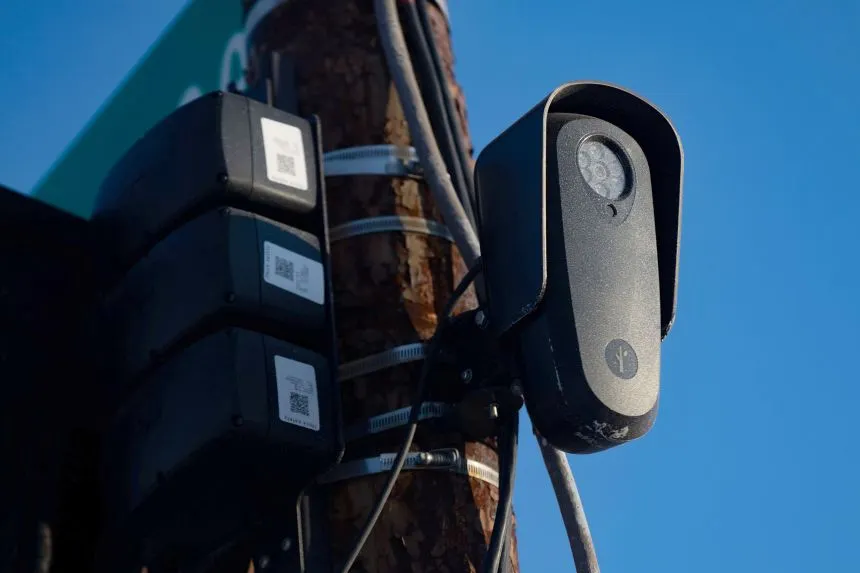
Photo of a Flock Safety camera mounted on a pole, showing the hooded lens and infrared illuminator
A Flock Safety ALPR camera in the field. Want more angles and tips for spotting one? See what a Flock camera looks like →

How Flock cameras work

Each camera is a small, motion-activated still camera, usually mounted on its own pole with a solar panel. When a vehicle passes, the camera takes photos of its rear and uploads them to Flock’s cloud, where software extracts the plate number and a “vehicle fingerprint” — the make, body type, color, and identifying details like roof racks, decals, or damage. Every sighting is logged with the time and location.

Agencies that use Flock can search this database by plate or by vehicle description, and can subscribe to real-time alerts when a plate on a hotlist (stolen vehicles, AMBER Alerts, wanted persons) passes a camera. Many agencies also opt into sharing, which lets other departments in the network search their cameras.

Who uses them

  • Police departments — the largest group, using them for investigations and hotlist alerts.
  • Homeowners associations and neighborhoods — often the first adopters in a city, placing cameras at entrances.
  • Businesses and property managers — shopping centers, car washes, and parking lots use them for theft deterrence.

Flock Safety, founded in 2017 in Atlanta, has grown into the largest ALPR vendor in the country — the company reports working with more than 5,000 law enforcement agencies, with over 120,000 cameras across 49 states.

Why they are controversial

Supporters credit Flock cameras with recovering stolen cars and solving crimes. Critics — including civil liberties groups — argue they amount to mass surveillance of everyday driving, since the overwhelming majority of plates logged belong to people suspected of nothing. Several cities have declined to renew contracts after public debate. Because there is no official public map of camera locations, community projects document them instead — which is exactly what this site’s live map shows.
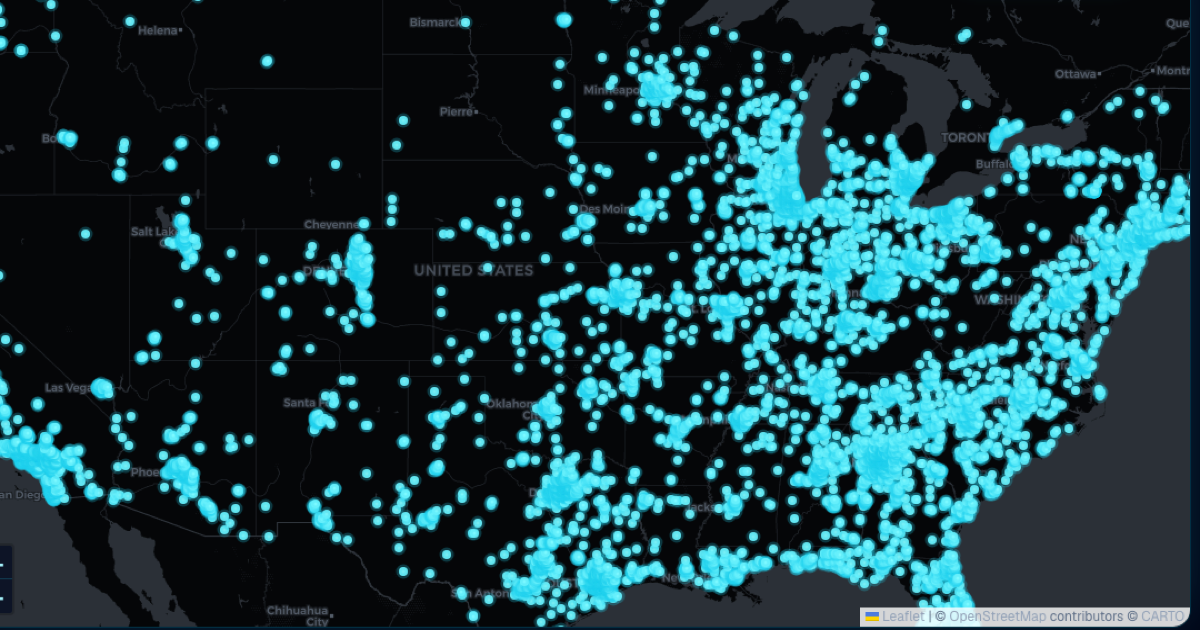
Map of Flock camera locations across the United States — over 119,000 ALPR license plate readers plotted from OpenStreetMap data
119,000+ reported Flock and ALPR cameras across the US, Canada, UK, and Europe — explore the live map. Data © OpenStreetMap contributors.

See the cameras for yourself

Open the live Flock camera map, check cameras near you, or browse locations by state.

Keep reading

Common questions

What do Flock cameras do?

Flock cameras photograph every vehicle that passes them and use software to read the license plate and log the vehicle’s make, type, color, and details like roof racks or bumper stickers. Each sighting is stored with a timestamp and location in a searchable database.

Do Flock cameras record video?

The standard Flock ALPR (the Falcon) captures still images of vehicles rather than continuous video. Flock also sells separate live-video products, but the small solar-powered cameras you see on poles are still-image plate readers.

How long do Flock cameras keep data?

By default, footage from Flock cameras is retained for 30 days and then deleted, unless it has been flagged as evidence in an investigation. Retention policies can vary by agency and contract.

Can Flock cameras issue speeding tickets?

No. Flock ALPRs are not speed cameras and do not issue citations. They record plate sightings that police can search later, and they can trigger real-time alerts when a plate on a hotlist — such as a stolen car — passes by.

Who owns Flock camera company?

Flock Safety, Inc., a private venture-backed company founded in Atlanta in 2017 by Garrett Langley. It is one of the largest ALPR vendors in the United States. The cameras themselves remain Flock's property — customers lease them on subscription.

What does Flock camera stand for?

Nothing — 'Flock' is not an acronym. It is a brand name evoking a flock of birds: neighbors banding together for safety. The company's camera models carry bird names too, like Falcon (the ALPR), Sparrow, and Condor.

How does a Flock camera work?

Motion triggers the camera to photograph the rear of a passing vehicle. The image is uploaded over a cellular connection to Flock's cloud, where software reads the plate and classifies the vehicle's make, type, and color. The sighting becomes searchable to the camera's operator and can trigger instant alerts for plates on law-enforcement hotlists.

How far can a Flock camera see?

The standard Flock ALPR reliably captures plates up to roughly 75 feet away in daylight, covering about one to two lanes of traffic in one direction. That short range is why cameras sit close to the roadside at entrances and intersections rather than high up like traffic cameras.

Can a Flock camera see inside your car?

The standard Falcon ALPR is not designed to: it photographs the rear of vehicles to capture the plate and exterior details, isn't aimed at windshields, and Flock states it does not use facial recognition. That claim is contested for a different, newer product, though — Flock's Condor, a pan-tilt-zoom video camera, was shown in a June 2026 TV news investigation zooming in on and following a person's face and movements in real time, despite the company's public statements that its cameras don't track people. The two products work very differently, so which one is nearby matters.

Do Flock cameras record all the time?

The Falcon ALPR does not — it's motion-triggered and takes still photos, not continuous video, of vehicles rather than pedestrians. Flock's separate Condor camera is different: it's a live-streaming video camera with a 'Guardian Mode' built to detect and follow moving people or vehicles in real time, feeding live video to police. If you're trying to figure out what a specific camera near you records, the model matters — a small still camera on a pole behaves very differently from a swiveling video camera.

Why are cities canceling Flock cameras?

A mix of privacy backlash, cost, and trust problems. Some councils face public pressure over mass tracking of residents who aren't suspected of anything; others have found their police department searched the network outside its stated purpose, or that Flock's marketing to city councils overstated what the system could do. Renewal is usually an annual decision, so any of these issues can surface at contract-renewal time and turn into a public debate — which several cities have resolved by not renewing.