
What does a Flock camera look like?
Once you know the silhouette, you will start seeing them everywhere: a small black camera on a skinny pole, topped with a solar panel, standing alone near an intersection or entrance.
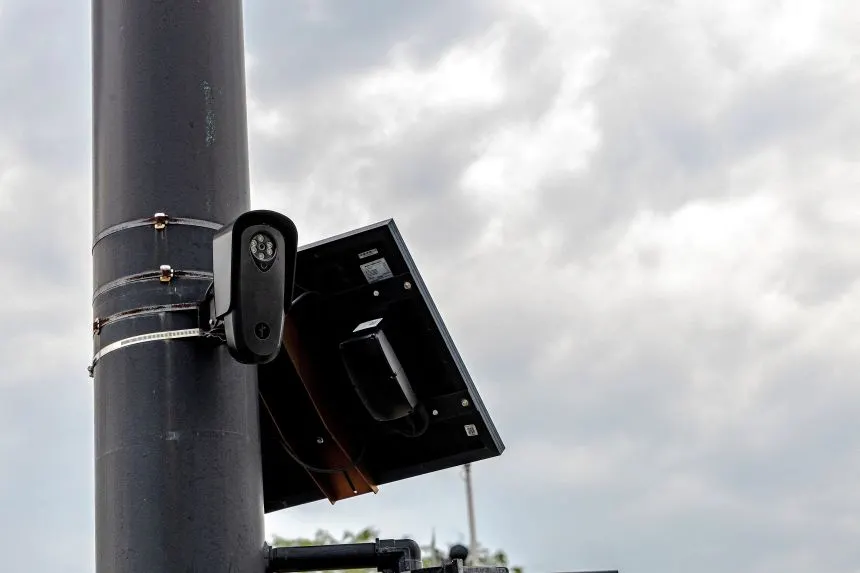
The three-part silhouette
- The camera: a compact black or dark-gray unit about the size of a large coffee mug, angled down the road to face oncoming traffic.
- The solar panel: a small rectangular panel mounted at the top of the pole, tilted toward the sun. This is the most recognizable giveaway — regular traffic cameras rarely have one.
- The pole: a thin, dedicated pole, typically 8–12 feet tall — shorter than streetlights — often planted in a grass strip, median, or roadside right-of-way.
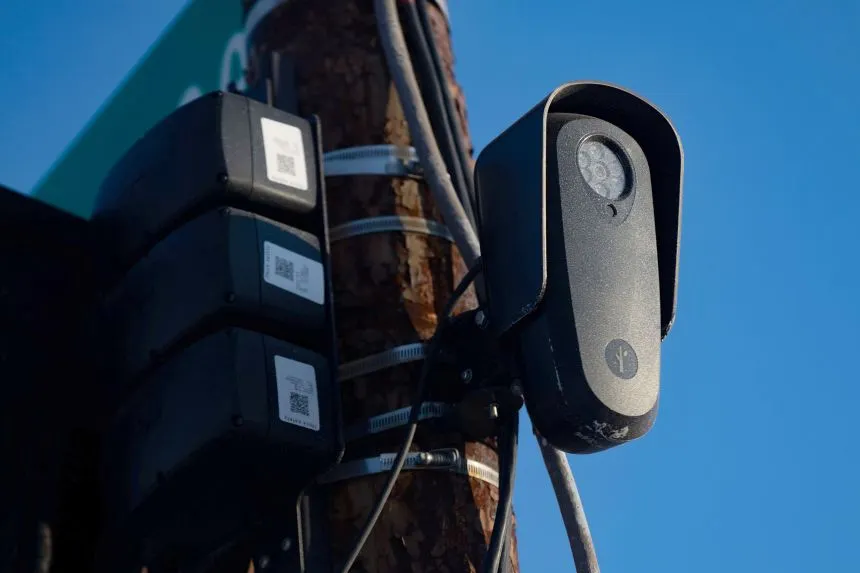
Where to look
Flock cameras are positioned to photograph the rear of vehicles, so they usually face away from the traffic they record. Common spots include:
- Neighborhood and HOA entrances, just inside the entry road
- Major intersections and highway on/off ramps at city limits
- Retail parking lot exits and shopping center driveways
- School, park, and municipal building entrances
What they are not
Flock ALPRs are easy to confuse with other roadside equipment. They are not the large gray boxes that flash for red-light or speed enforcement, not the dome or bullet cameras on traffic signal mast arms, and not utility monitoring gear. If you see a small camera and a solar panel sharing a short standalone pole, it is very likely an ALPR — check the live map to see whether it has already been reported.